Belur Temple Puzzle King: The Ancient Indian Mind Game ?♟️
Discover the fascinating world of Belur Temple Puzzle King, a traditional Indian puzzle game that has challenged intellects for centuries
Game Overview
The Belur Temple Puzzle King represents one of India's most sophisticated traditional puzzle games, originating from the Hoysala Empire period. This intellectual challenge combines elements of mathematics, strategy, and spatial reasoning in a unique format that has captivated players for generations.
Unlike Western puzzle games, the Belur Temple Puzzle King incorporates symbolic elements from Hindu mythology and temple architecture, creating a deeply cultural gaming experience. The game's complexity arises from its deceptively simple rules that conceal profound strategic depth.
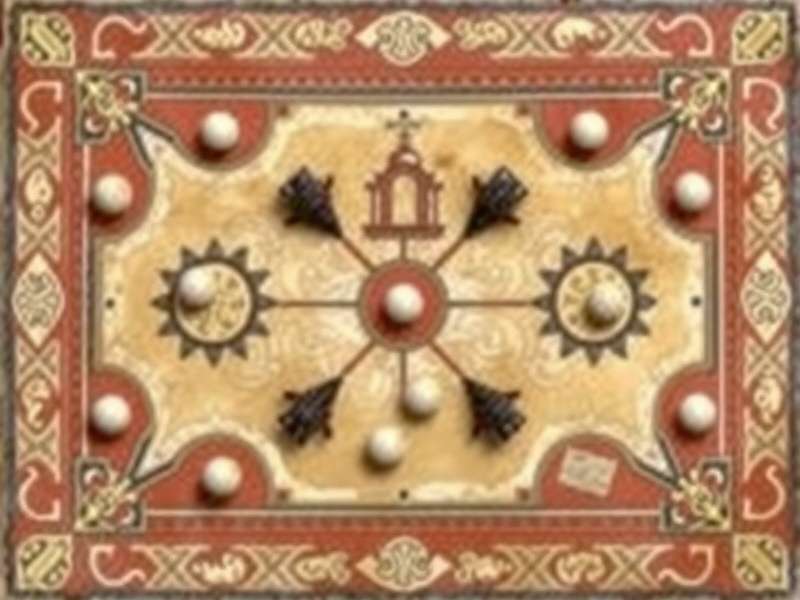
Modern enthusiasts describe the Belur Temple Puzzle King as a cross between chess, Sudoku, and traditional Indian board games. Its enduring appeal lies in the perfect balance between accessible gameplay and near-infinite strategic possibilities that continue to challenge even the most experienced players.
Historical Origins
The origins of Belur Temple Puzzle King can be traced directly to the magnificent Chennakesava Temple in Belur, Karnataka, built during the 12th century under King Vishnuvardhana of the Hoysala Empire. Temple inscriptions and archaeological evidence suggest that court scholars developed the game as both entertainment and mental exercise.
Historical Context: The Hoysala period (1026-1343 CE) was marked by significant advancements in art, architecture, and intellectual pursuits. The creation of Belur Temple Puzzle King reflects this golden age of Indian civilization, where games were considered both recreation and spiritual practice.
Initially played exclusively by royalty and temple scholars, the game gradually spread throughout Southern India. By the 14th century, variations of Belur Temple Puzzle King appeared in Tamil and Telugu literary works, indicating its growing popularity across linguistic and cultural boundaries.
The British colonial period saw a decline in traditional Indian games, but Belur Temple Puzzle King survived through oral tradition and family lineages. Post-independence cultural revival movements in the 20th century helped restore the game to its current status as a cherished part of India's intellectual heritage.
Game Rules & Mechanics
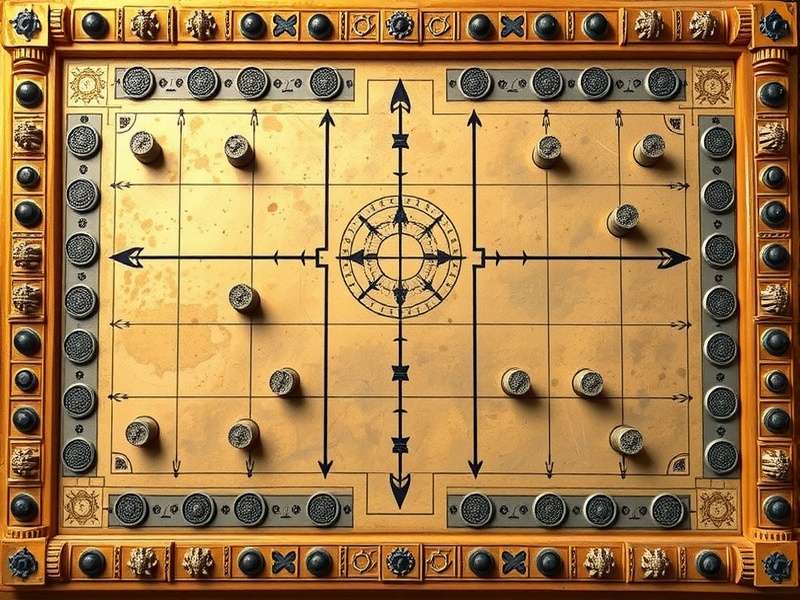
The fundamental objective of Belur Temple Puzzle King is to arrange movable pieces according to specific patterns while adhering to constraint-based rules. The game board typically features a symmetrical design inspired by temple architecture, with concentric circles and radial divisions.
Board Setup
The traditional board consists of 49 positions arranged in seven concentric circles with seven radial divisions. Each position can hold one game piece, with starting configurations varying by regional tradition.
Game Pieces
Players use 24 identical pieces, typically carved from sandalwood or stone. Each piece represents different elements: earth, water, fire, air, and ether, adding symbolic depth to strategic decisions.
Movement Rules
Pieces move along predefined paths following mathematical sequences. The primary movement follows Fibonacci sequences, while special moves incorporate geometric progressions and prime number patterns.
Victory in Belur Temple Puzzle King is achieved through one of three methods: forming specific sacred geometric patterns, capturing opponent pieces through mathematical sequences, or achieving a "temple completion" where all pieces form a harmonious arrangement.
Advanced Strategies
Mastering Belur Temple Puzzle King requires developing multiple strategic approaches that can be adapted to different opponent styles. Expert players typically employ a combination of defensive formations, offensive sequences, and transitional patterns.
Defensive Formations
The "Lotus Formation" creates an impenetrable defensive structure where each piece protects multiple adjacent positions. This formation derives from temple architectural principles where structural elements provide mutual support.
Offensive Sequences
Advanced players use mathematical sequences to execute complex attacks. The "Fibonacci Assault" leverages the Fibonacci sequence to create cascading capture opportunities, while the "Prime Progression" uses prime number intervals to bypass defensive formations.
Expert Tip: The most successful Belur Temple Puzzle King players maintain flexibility between different strategic approaches. Rigid adherence to a single strategy often leads to predictable patterns that skilled opponents can exploit.
Transitional Play
Intermediate phases of the game require careful management of piece mobility and board control. Expert players emphasize maintaining "option density" - ensuring multiple future moves remain available while limiting opponent choices.
Cultural Significance
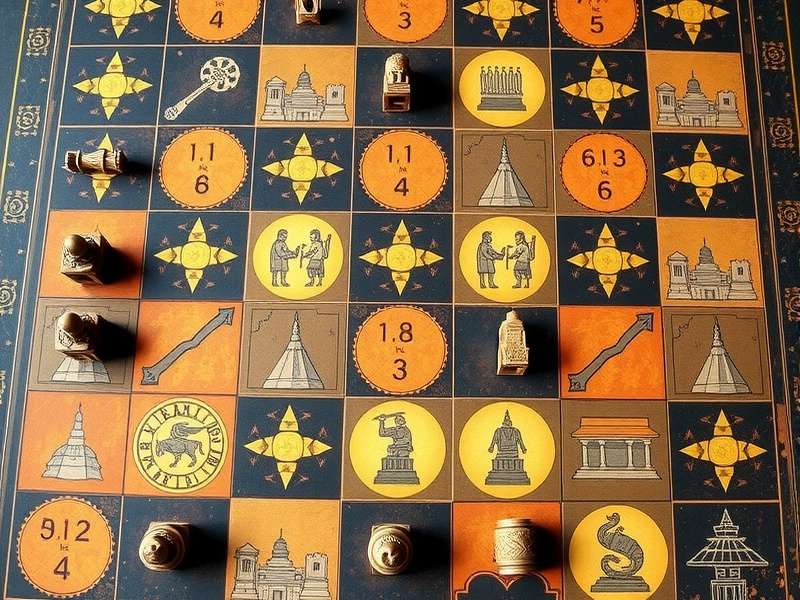
The Belur Temple Puzzle King transcends mere entertainment, embodying profound philosophical concepts from Indian tradition. The game serves as a metaphorical representation of cosmic order (rita) and the interplay between structure and chaos in the universe.
In traditional Indian education, mastering Belur Temple Puzzle King was considered essential for developing logical reasoning, strategic thinking, and mathematical ability. Temple schools often used the game to teach complex mathematical concepts through practical application.
Cultural Revival: In recent decades, organizations like the Indian Traditional Games Society have worked to preserve and promote Belur Temple Puzzle King through tournaments, educational programs, and digital adaptations. This revival reflects broader interest in preserving India's rich cultural heritage.
The game's symbolism extends to spiritual practice, with some traditions using Belur Temple Puzzle King arrangements for meditation and contemplation. The process of solving complex puzzle configurations mirrors the spiritual journey toward enlightenment through disciplined practice.
Contemporary interest in Belur Temple Puzzle King has grown significantly with the global popularity of puzzle games and brain teasers. International mathematics conferences have featured the game as an example of traditional mathematical thinking, while cognitive scientists study its benefits for developing strategic reasoning skills.
Modern Adaptations
In the 21st century, Belur Temple Puzzle King has undergone several transformations while maintaining its core principles. Digital versions now allow global enthusiasts to experience this traditional Indian game, with online platforms hosting international tournaments.
Educational institutions in India have incorporated Belur Temple Puzzle King into mathematics curricula, recognizing its value for developing logical reasoning and problem-solving skills. Research has demonstrated measurable improvements in spatial reasoning and mathematical ability among students who regularly play the game.
The future of Belur Temple Puzzle King appears bright, with growing international recognition and digital accessibility ensuring this ancient Indian intellectual tradition will continue to challenge and delight players for generations to come.