Patthar Conqueror: India's Ancient Stone Strategy Game
Discover the rich heritage and strategic depth of this traditional Indian pastime
Game Overview
Patthar Conqueror is a traditional Indian strategy game played with stones that has been enjoyed for centuries across the Indian subcontinent. This game combines elements of skill, strategy, and foresight, making it a favorite among both children and adults in rural and urban areas alike.
? Quick Facts: Patthar Conqueror is typically played with 5-7 small stones, requires 2 players, and games last between 10-30 minutes depending on skill level.
The objective of Patthar Conqueror is to strategically capture your opponent's stones while protecting your own, using a combination of tactical placements and calculated moves. The game is known for its simple rules but deep strategic possibilities.
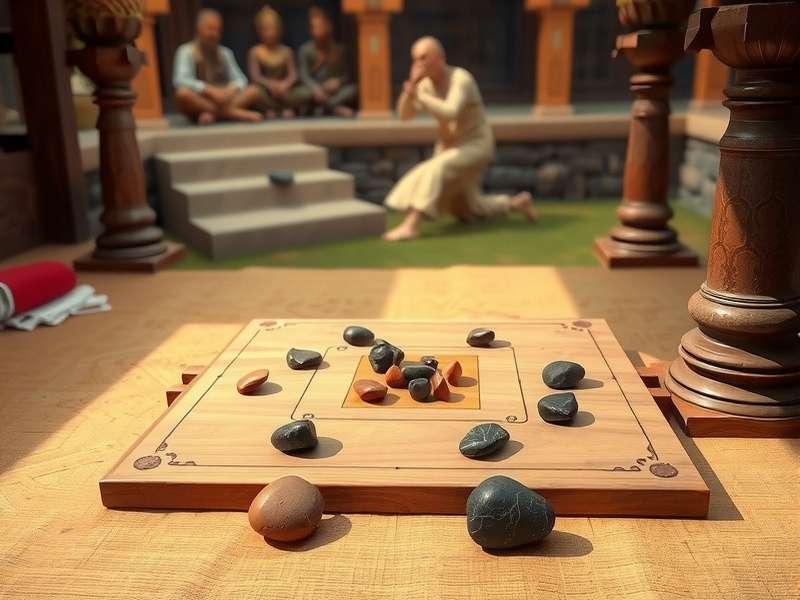
What makes Patthar Conqueror particularly fascinating is its blend of mathematical thinking and intuitive gameplay. Players must constantly assess the board state, predict opponent moves, and adapt their strategies accordingly.
Historical Origins
The origins of Patthar Conqueror can be traced back to ancient India, with references found in folk tales and regional literature dating back several centuries. The game was particularly popular in agricultural communities where stones were readily available.
Historical records suggest that variations of Patthar Conqueror were played across different regions of India, with each area developing its own slight modifications to the rules and gameplay. This regional diversity contributed to the game's rich tapestry of strategies and techniques.
? Historical Significance: Patthar Conqueror was not merely entertainment but also served as a tool for developing mathematical and strategic thinking among young people in traditional Indian societies.
During the British colonial period, Patthar Conqueror experienced a decline in urban areas but remained popular in rural communities. In recent decades, there has been a resurgence of interest in traditional Indian games, including Patthar Conqueror, as part of cultural preservation efforts.
The game's simplicity and minimal equipment requirements made it accessible to people across socioeconomic backgrounds, contributing to its widespread popularity throughout Indian history. Patthar Conqueror was often played during festivals, family gatherings, and community events.
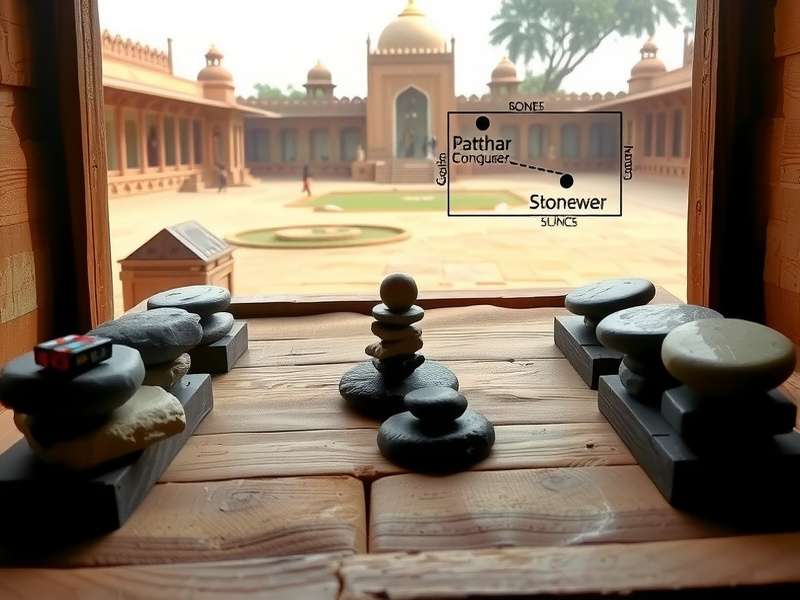
Modern competitive Patthar Conqueror tournaments have emerged in some regions, helping to preserve this traditional game while introducing it to new generations. These tournaments often feature both traditional and modified versions of the game.
Game Rules & Mechanics
The rules of Patthar Conqueror are elegantly simple yet allow for complex strategic play. Understanding these rules is essential for mastering this traditional Indian game.
Basic Setup
To play Patthar Conqueror, you need a flat surface and 5-7 small stones per player. The stones should be of similar size but distinguishable between players (often different colors or types of stone).
The playing area is typically marked with a circle or square, though informal games may use natural boundaries. Players sit opposite each other with their stones arranged in their starting positions.
⚙️ Equipment Needed: 10-14 small stones (5-7 per player), flat playing surface, optional boundary markers.
Gameplay Mechanics
Players take turns moving one of their stones according to the game's movement rules. The specific movement patterns vary by regional variation but typically involve moving stones to adjacent positions or jumping over other stones.
Capturing occurs when a player's stone lands on a position occupied by an opponent's stone. The captured stone is removed from play. Some variations of Patthar Conqueror allow for multiple captures in a single turn under specific conditions.
The game continues until one player has captured all of their opponent's stones or until a predetermined number of rounds have been completed. In tournament play, time limits may also be imposed.
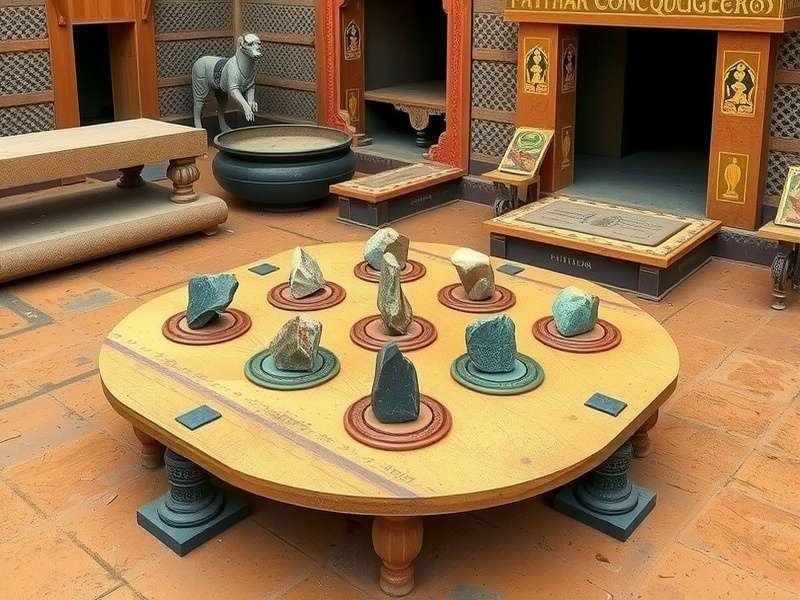
Winning Conditions
A player wins Patthar Conqueror by either capturing all of their opponent's stones or achieving a positional advantage that makes further resistance futile. In some variations, points are awarded based on stones captured and board position.
Draws can occur if both players repeatedly make the same moves or if neither player can achieve a winning advantage after a predetermined number of turns. Tournament rules typically include provisions for resolving drawn games.
Advanced Strategies
Mastering Patthar Conqueror requires developing sophisticated strategies that balance offensive and defensive play. Experienced players often employ complex tactical sequences that can take years to perfect.
Opening Strategies
The opening moves in Patthar Conqueror set the tone for the entire game. Conservative openings focus on developing a strong defensive position, while aggressive openings aim to put immediate pressure on the opponent.
Common opening strategies in Patthar Conqueror include the "Stone Wall" defense, the "Tiger's Pounce" attack, and the "River Crossing" development approach. Each has distinct advantages and vulnerabilities that skilled players learn to exploit.
? Pro Tip: In Patthar Conqueror, controlling the center of the board early in the game often leads to significant strategic advantages in the mid and late game.
Mid-Game Tactics
The mid-game in Patthar Conqueror is characterized by complex positional battles and tactical exchanges. Players must constantly evaluate whether to pursue capturing opportunities or strengthen their own positions.
Advanced tactical concepts in Patthar Conqueror include forks (attacking multiple stones simultaneously), pins (restricting opponent stone movement), and sacrifices (intentionally losing a stone to gain positional advantage).
Successful mid-game play requires the ability to think several moves ahead while adapting to your opponent's strategy. Pattern recognition becomes increasingly important as the game progresses.
Endgame Techniques
The endgame in Patthar Conqueror occurs when most stones have been captured and the board is relatively open. Precision becomes paramount as each move carries significant weight.
Key endgame skills include king and pawn techniques (when one player has significantly fewer stones), opposition (controlling key positions), and zugzwang (forcing your opponent into disadvantageous moves).
Studying classic endgame positions is one of the most effective ways to improve your Patthar Conqueror skills. Many traditional Indian households have passed down specific endgame sequences through generations.
Cultural Significance
Patthar Conqueror holds a special place in Indian cultural heritage, representing more than just a pastime but also embodying traditional values and social interactions.
In many Indian communities, Patthar Conqueror was traditionally played during festivals and gatherings, serving as both entertainment and a social bonding activity. The game often brought together people of different ages and backgrounds.
? Cultural Preservation: Efforts to document and promote Patthar Conqueror are part of broader initiatives to preserve India's intangible cultural heritage and traditional games.
The game has been referenced in Indian folk tales, proverbs, and even in some classical literature, where it often serves as a metaphor for strategic thinking and patience. These cultural references have helped maintain awareness of Patthar Conqueror even as modern entertainment options have proliferated.
In recent years, there has been growing interest in introducing Patthar Conqueror in educational settings. Educators recognize its potential for developing logical thinking, pattern recognition, and strategic planning skills in students.
Cultural organizations across India have begun organizing Patthar Conqueror tournaments and workshops to ensure this traditional game is not lost to future generations. These events often attract participants from diverse age groups and backgrounds.
The digital age has also seen the development of online versions of Patthar Conqueror, allowing players to compete across distances while preserving the essential gameplay mechanics. These digital adaptations represent an interesting fusion of traditional Indian culture with modern technology.
As India continues to modernize, games like Patthar Conqueror serve as important cultural touchstones, connecting contemporary Indians with their rich heritage. The continued popularity of this game demonstrates the enduring appeal of traditional pastimes in an increasingly digital world.
Learning Resources
For those interested in learning Patthar Conqueror, numerous resources are available ranging from traditional oral instruction to modern digital tutorials.
Many community centers in India offer classes on traditional games including Patthar Conqueror. These classes often combine instruction in the game's rules with historical and cultural context.
Online platforms have emerged that provide video tutorials, interactive lessons, and opportunities to play Patthar Conqueror against computer opponents or other players. These resources have made the game more accessible to international audiences.
Several books have been published on traditional Indian games that include comprehensive sections on Patthar Conqueror. These publications often include detailed diagrams, historical background, and collections of classic games and strategies.
Competitive Play
While Patthar Conqueror is often played casually, organized competitive play has grown in popularity in recent years, with tournaments held at local, regional, and national levels.
Competitive Patthar Conqueror typically follows standardized rules to ensure fair play across different venues and events. Tournament organizers often work to balance traditional gameplay with the requirements of formal competition.
Rating systems have been developed for serious Patthar Conqueror players, allowing them to track their progress and compare their skills with other players. These systems help foster a sense of community among dedicated players.
Major Patthar Conqueror tournaments often feature multiple divisions based on skill level, age, or regional variations of the game. This inclusive approach helps ensure that players of all backgrounds can participate in competitive play.
Community & Social Aspects
The social dimension of Patthar Conqueror is one of its most enduring features, with the game serving as a catalyst for community interaction and intergenerational connection.
In many Indian villages, Patthar Conqueror games are regular social events that bring community members together. These gatherings often transcend the game itself, featuring food, music, and other forms of socializing.
The game has traditionally been a means for elders to pass on wisdom and strategic thinking to younger generations. This educational aspect of Patthar Conqueror extends beyond the game itself to include lessons about patience, planning, and sportsmanship.
Modern Patthar Conqueror clubs and associations have formed in various parts of India and abroad, creating networks of players who share an interest in this traditional game. These organizations often host events, publish newsletters, and work to promote the game to new audiences.
Variations & Regional Adaptations
Throughout its history, Patthar Conqueror has developed numerous regional variations, each with unique rules, strategies, and cultural significance.
In northern India, a faster-paced version of Patthar Conqueror is popular, with simplified rules and an emphasis on aggressive play. This variation is often preferred by younger players and in more casual settings.
Southern variations of Patthar Conqueror tend to be more methodical and strategic, with complex rules governing stone movement and capturing. These versions often appeal to players who enjoy deep strategic thinking.
Coastal regions have developed their own distinctive versions of Patthar Conqueror that incorporate local materials and playing surfaces. These adaptations demonstrate how the game has evolved to reflect its environment.
Understanding the different regional variations of Patthar Conqueror provides insight into India's cultural diversity and the ways in which a shared game can develop distinct characteristics in different communities.
Cognitive Benefits
Research into traditional games has identified numerous cognitive benefits associated with playing Patthar Conqueror, making it not just entertainment but also a valuable mental exercise.
Regular play of Patthar Conqueror has been shown to improve strategic thinking, pattern recognition, and problem-solving skills. These cognitive benefits extend beyond the game itself to other areas of life.
The game requires players to think several moves ahead, developing foresight and planning abilities. This mental exercise can help maintain cognitive function in older players while developing these skills in younger ones.
Educational researchers have explored incorporating Patthar Conqueror into mathematics and logic curricula, using the game to demonstrate concepts such as probability, game theory, and logical sequencing.
Beyond cognitive benefits, Patthar Conqueror also promotes social skills including sportsmanship, patience, and the ability to read and respond to another person's strategies and emotions.